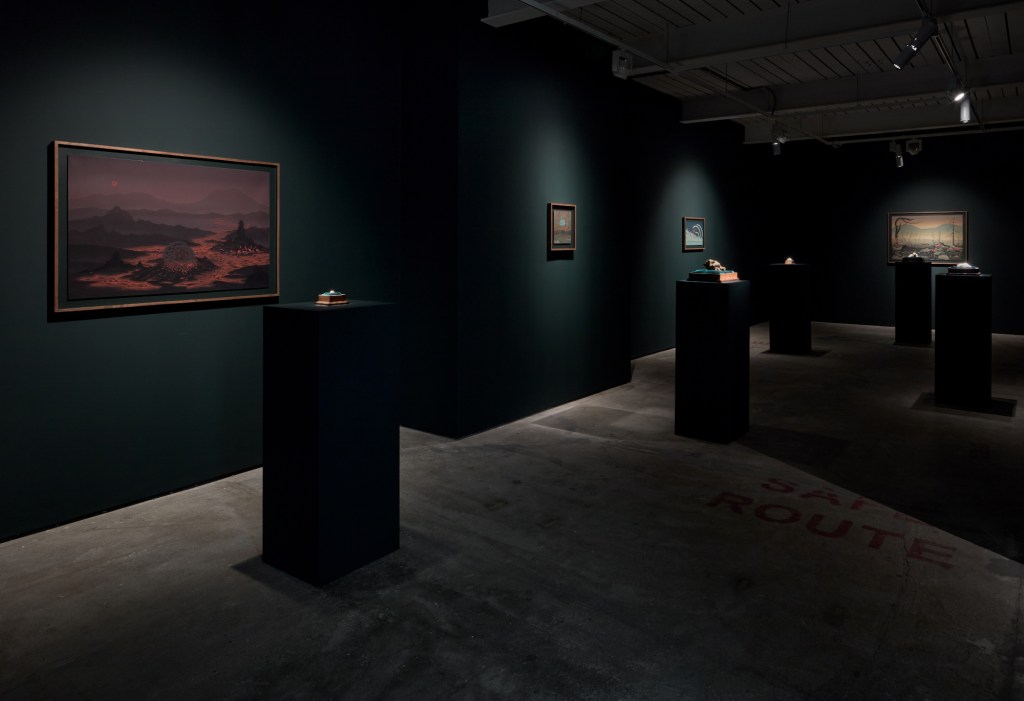
The Matrician is a solo exhibition at GATHERING featuring groupings of six paintings, sculptures and poems, each group representing an individual story. It opened on the 25th of June and will be running until the 1st of August. The opening night on the 24th of June included a performance with a presentation and tour of the exhibition, presenting the fictional museum setting as if real.
(Text from gallery website)
“But then, one has discovered the gateway to the environments, for everything a subject perceives belongs to its perception world [Merkwelt], and everything it produces, to its effect world [Wirkwelt]. These two worlds, of perception and production of effects, form one closed unit, the environment.”¹
When biologist Jakob von Uexküll coined the term Unwelt, he was examining the senses of various organisms: ticks, sea urchins, amoebae, jellyfish. Interested in how living beings perceived their environments, he argued that organisms experience life as subjects through their own reference frames, or, Umwelt. If, as Uexküll argued, every living creature inhabits a world of its own, any belief held in the existence of one and only one world, space and time for all living beings must be in doubt. Rather, we might open our minds to the immeasurable perceptual worlds in current existence, with each organism existing in its own sensory universe.
The objects on display in The Matrician are remnants of one of these such worlds. A brain, shoulderblade, heart, hipbone, nerve and cochlea exhibit the remains of an unknown species of creature that fell to Earth at an unknown time following the cataclysm of an alien meteorite. These fragments spread across our planet and hold the story of a life-form, the world they lived in constituted through their specific ways of perceiving their Umwelten. One took on the form of a body built with wooden flesh, bones of stone and fungal tissue. Another has an existence entirely experienced through rhythmic functions in a body of rocks. Poems accompany the extraterrestrial organs, tracing their thoughts and revealing the life and demise of the creatures. Transcribed into human language, the poems reflect what little information we have on the mysterious nature of these entities, while also illuminating their final death scenes.
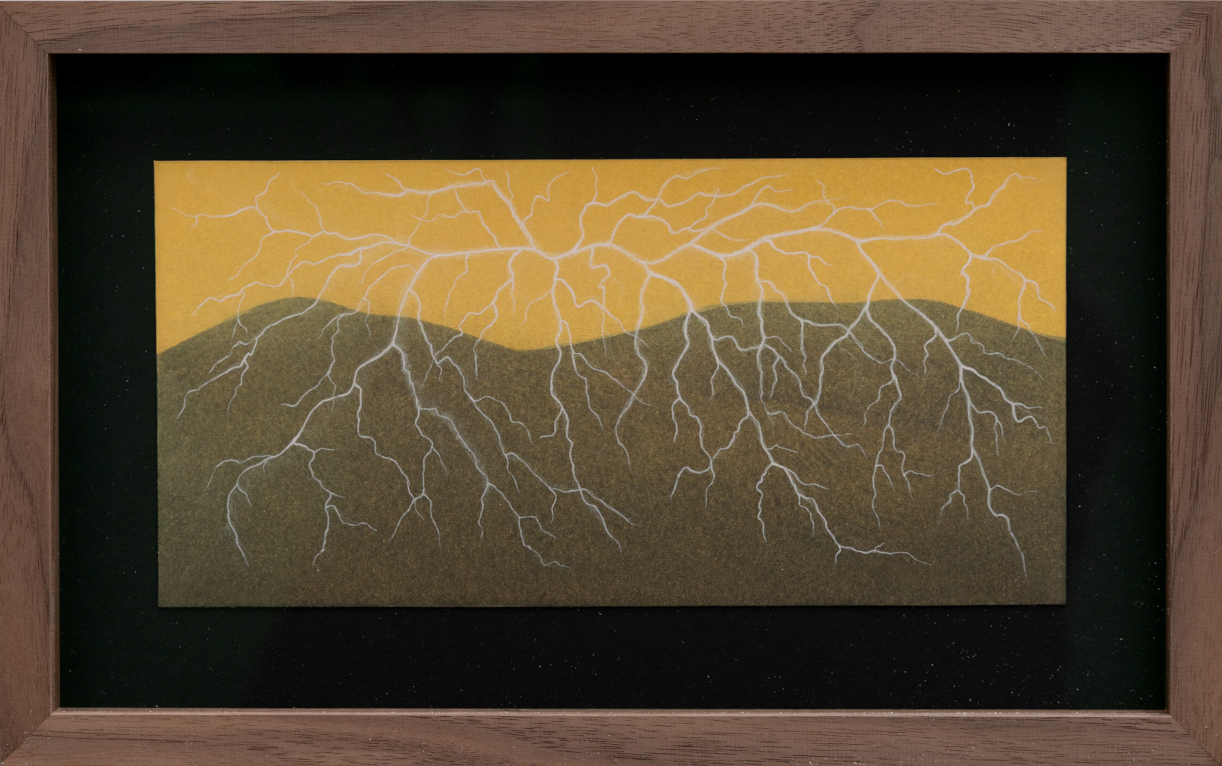
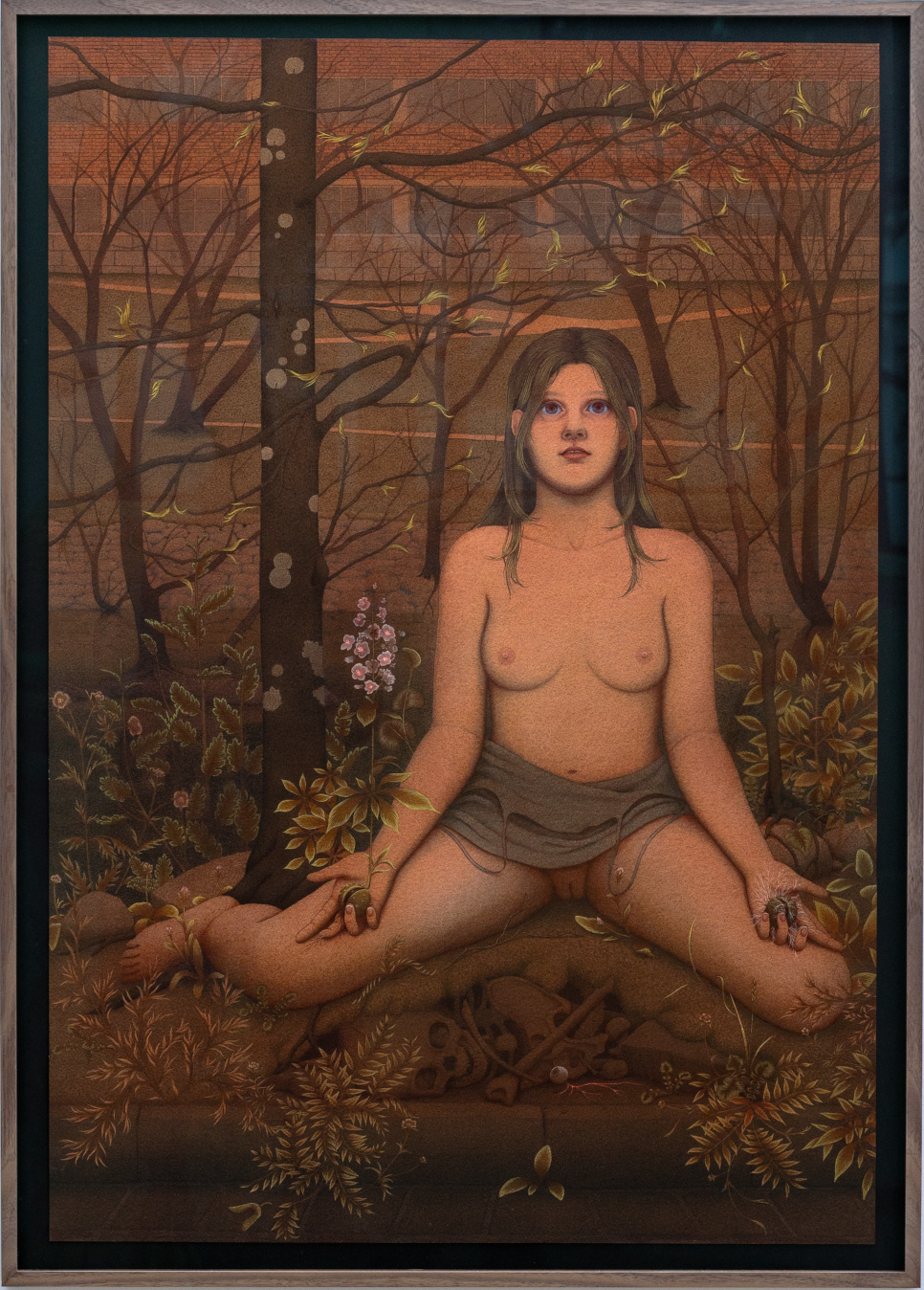
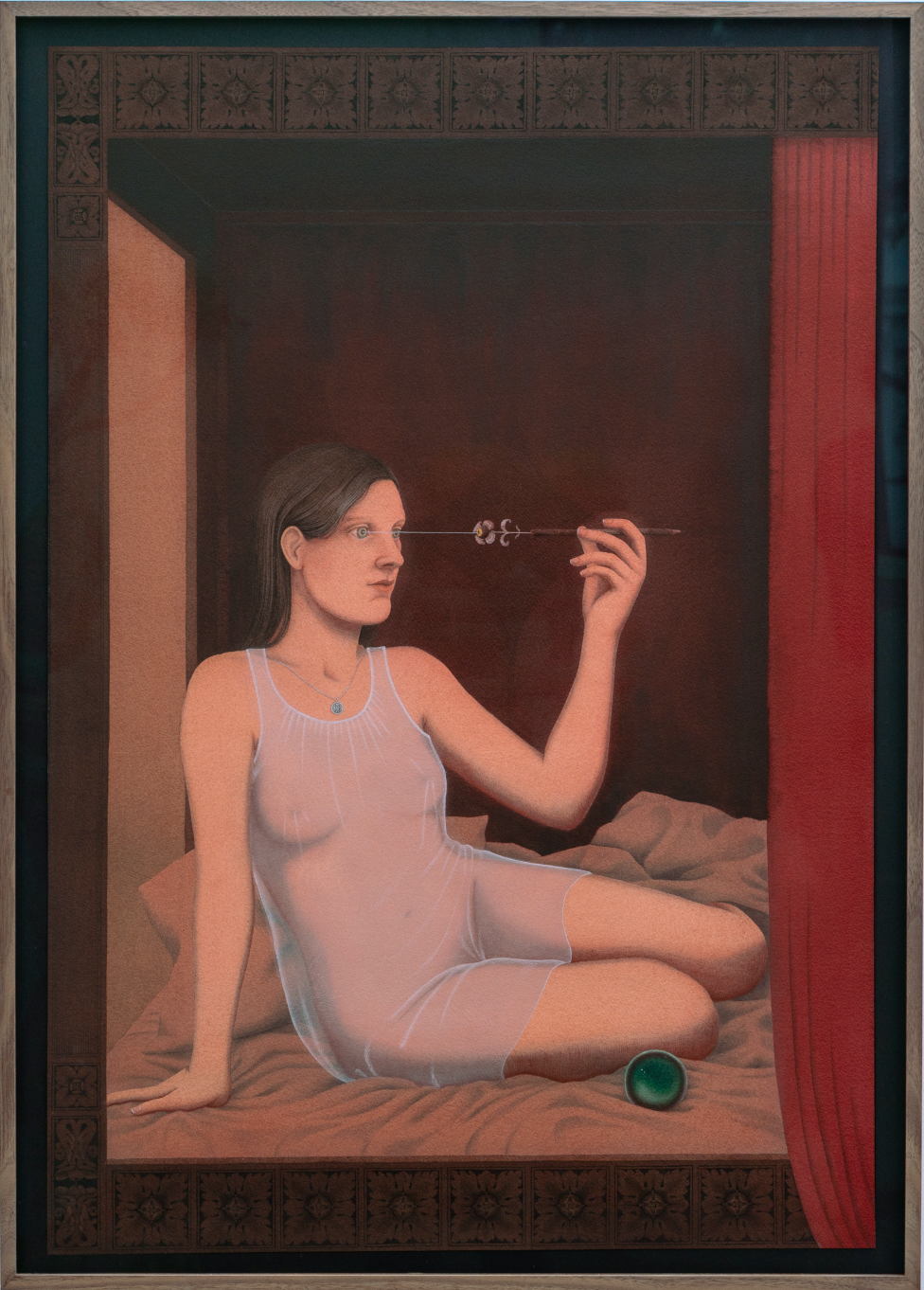
Sønderland’s watercolour counterparts to the fossilised remains allow us to speculate on these life-forms through our own narrative universe, our own Umwelt. The artist metabolises the cosmic and esoteric evolution of these entities into scenes vaguely familiar, yet unidentified: a figure on the brink of discovery in Spell; a desolate landscape of Ember, in which an unknown substance burns into trees like an opening into an abyss, or fire through flesh; Compass’s icy anthropomorphic forest with the haunting blue palette and evocative mood of Harald Sohlberg. Rendered delicately, the paintings offer a material history to the cosmic remnants on display. By pairing the primordial artefacts with her paintings, Sønderland explores the porous and temporal layering of our supposed reality, subverting the objet trouvé into an act of cosmogenesis, where new worlds unfold through material transformation and uncharted imagination. At the core of Sønderland’s narrative is death and its cyclical nature; through mortality, we can explore the possibilities and different forms that life can take in the universe.»
¹ Jakob von Uexküll, A Foray into the Worlds of Animals and Humans, 1934.
(Text from performance)
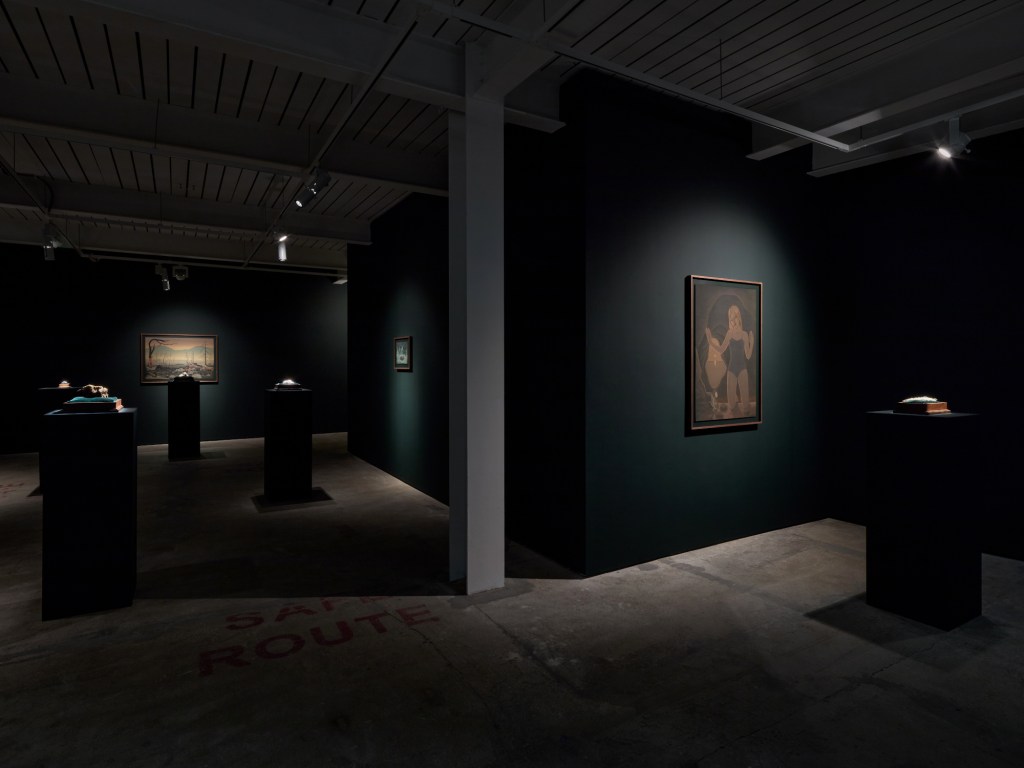
Art illuminates science in this exhibition, showcasing six paintings alongside six archaeological finds and six accompanying poems.
It all started with the discovery of a peculiar stone, found in a dense forest by the foot of a mountain. It was brought into a laboratory for analysis, where scientists discovered a strange rhythmic pattern inscribed into its surface. They ran a scan of the pattern through an AI model capable of analyzing and comparing structural rhythms. The analysis revealed that the pattern shared striking similarities with the rhythms of human language. By further training the AI to analyze and compare variations of language, they were eventually able to translate the mysterious pattern into English, which resulted in a cohesive poem. The poem describes the life and death of a creature that once existed, along with its environment and lived experience. As five other objects bearing similar patterns were later discovered, we now have a total of six body parts from different creatures, all showcased here tonight. Every poem ends with the death of its creature, and they have therefore been named Death Poems. This may remind you of the famous Egyptian funerary texts, which accompanied the dead into the afterlife to protect and guide them. These poems, however, are less concerned with what comes after death than with the stoic acceptance of the end itself.
The origin of these creatures lies in a life form that arrived with an interstellar object, most likely a comet, which exploded upon entering Earth’s atmosphere with its fragments scattered across the planet. It had an ability to manipulate and control the electromagnetic field, as well as other organisms, in order to gather the materials around it to construct a body for itself. Its surroundings therefore determined both its physical form and its experience of the world. It is therefore called The Matrician, as it is a manipulator of the matrix of our existence.
We will start with looking at the first piece that was found, the hipbone. The creature describes how it used wood to create its muscle, stone as its skeleton while controlling fungus to work as its binding tissue. By using fungi, it was able to be connected with the Wood Wide Web and gather nutrition from this source. This way it could exist as a wandering tree. Unfortunately, the whole of the forest was burnt down in a forest fire, and its experience is shared with us in this poem.
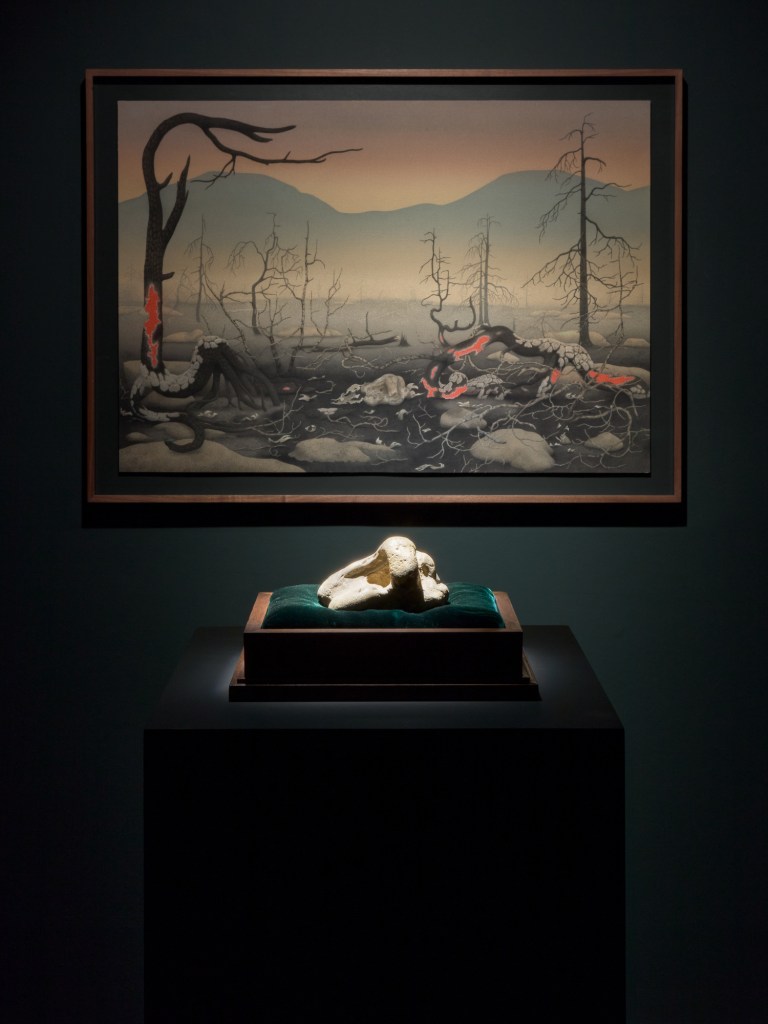
Ember
Tough joint of stone
Tissue of shroom
Bend this wood
To hardened skin
I roam this land
Forest evergreen
Sparrows painted black
A blue man of dawn
The ground sucked dry
A summer of burning air
All the leaves crusted
Grass like strands of hair
First a million ants
Then a hundred deer
All had their eyes
Blinded with fear
I hear a thousand gallops
Of crackling little teeth
Hungry as it is
It just wants to exist
Everything is eaten
By the little beast
Resting in the ember
Feeding my last piece
The next piece we are looking at is a cochlea, which is a piece of bone that you have in your ear. It can be compared to work like a microphone, translating acoustic vibrations into electrical neural impulses, which gives us the experience of sound. Here, the creature took on a form similar to that of a bone-eating worm, however with the ability to grow numerous arms at will and to move around freely. It resided around a whale fall, which can be the source of a flourishing, chemically based ecosystem at the bottom of the sea. As there were only bones left, the creature lived in a quiet and peaceful environment on its own, feeding on the last of the bones. However, after finding a snail house and placing it on its head, it was suddenly met with another reality as it could hear the traces of sound from the coral reef that the snail house had come from. This led to a whole new experience of vibrancy for the creature, leading it to use its entire reservoir of nutrients in a final dance of excitement.
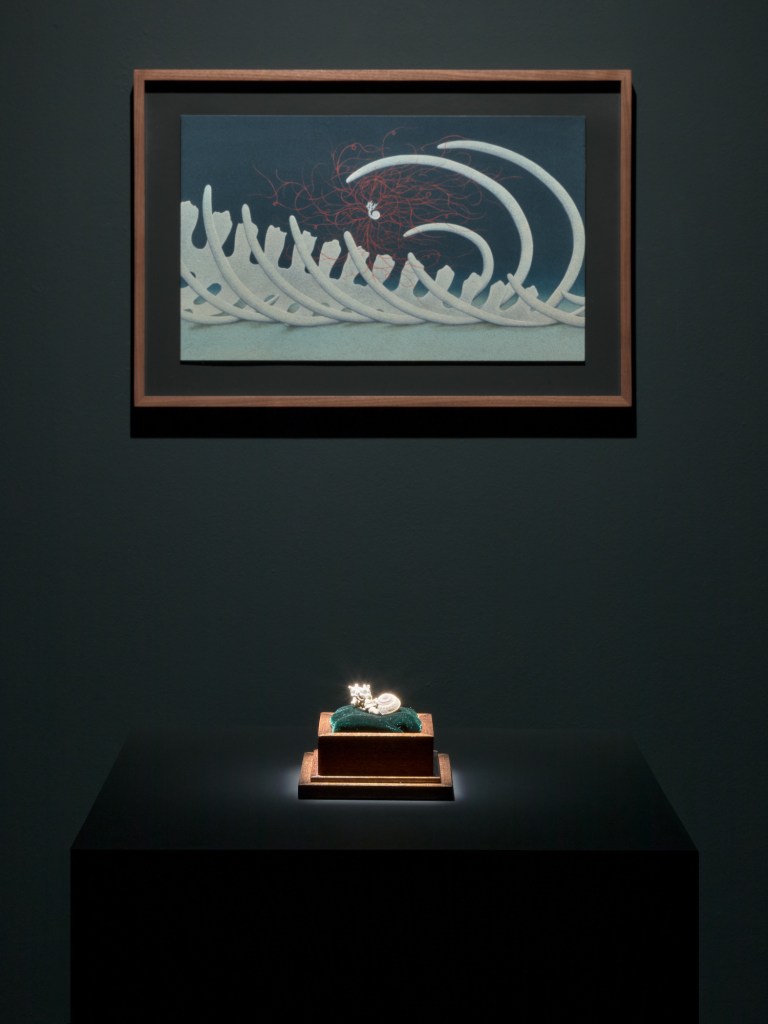
Pirouette
Forest fallen of the sky
Armored walls in cavity
The white roof of a rib
Running the muted city
Ferrous, grabbing arms
Floaters in liquid wind
Bind them all to me
Sprouting every limb
See me twirl
I’m a lovely girl
Cochlea head
Bed of crimson thread
Spiral house, an ear
Hear a buzzing red
Rings of fluttering blue
Strains line a yellow hue
I curl, stretch, then linger
Love bursting through
Every note tingle
This world is all new
Running on fumes
One last pirouette
I will take the toll
for my little death
What we see here is a piece of quartz with borax crystals grown on its surface; in the past it functioned as a heart. After a fragment landed in the bottom of a pond, the creature was able to anchor itself to a rock of quartz and manipulate the electromagnetic field to heat and slowly evaporate the water while extracting wanted minerals off the ground. This way it could create a concentrated bath of borax, so that over the course of hundreds of years and with the help of trees filling in the shrinking pond, it was able to build a body for itself in an attempt to find its way home.
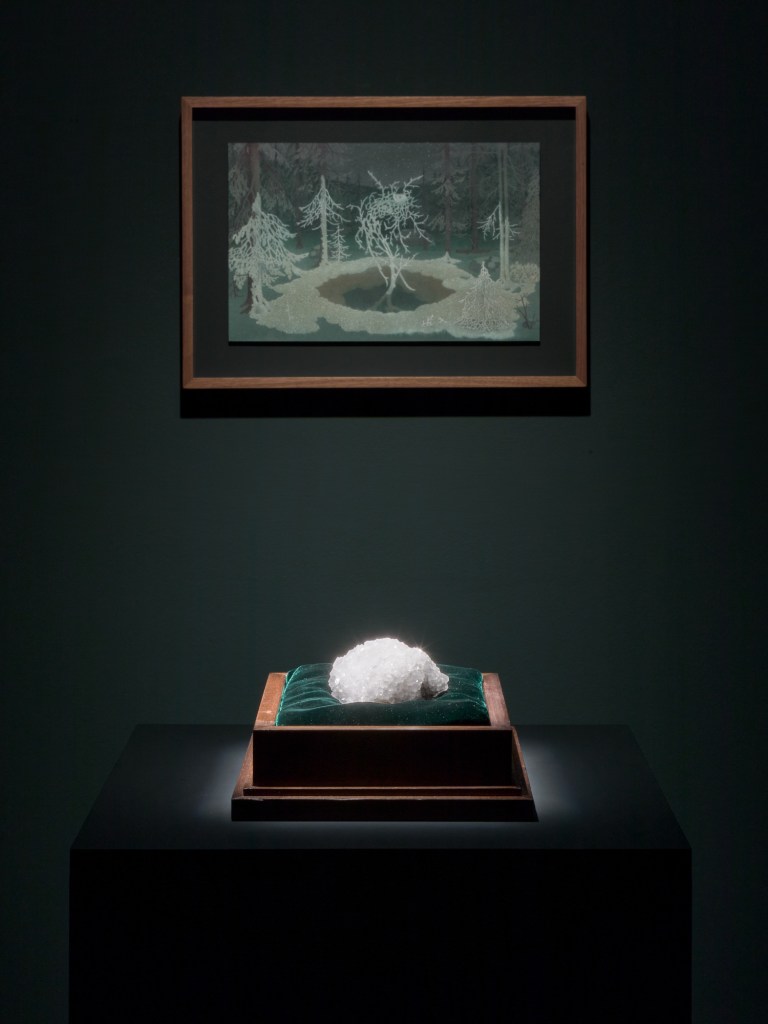
Compass
Dry the waters
Of the blackened void
Light the little fires
Heavy roots fold
Little seeds of star
Gather round me
Grow to a spear
An all seeing sphere
Pointed to the sun
All the mirrors burn
Wake the one who
Await for my return
Veil of darkest night
A million blinking eyes
Sail across the cradle
Arise to then demise
Betrayal of the flesh
Or the lasting suns
grand gesture turned
To all hope burned
Slowly, with wind
Rain fills the pond
All the weight of sorrow
Crushing the bond
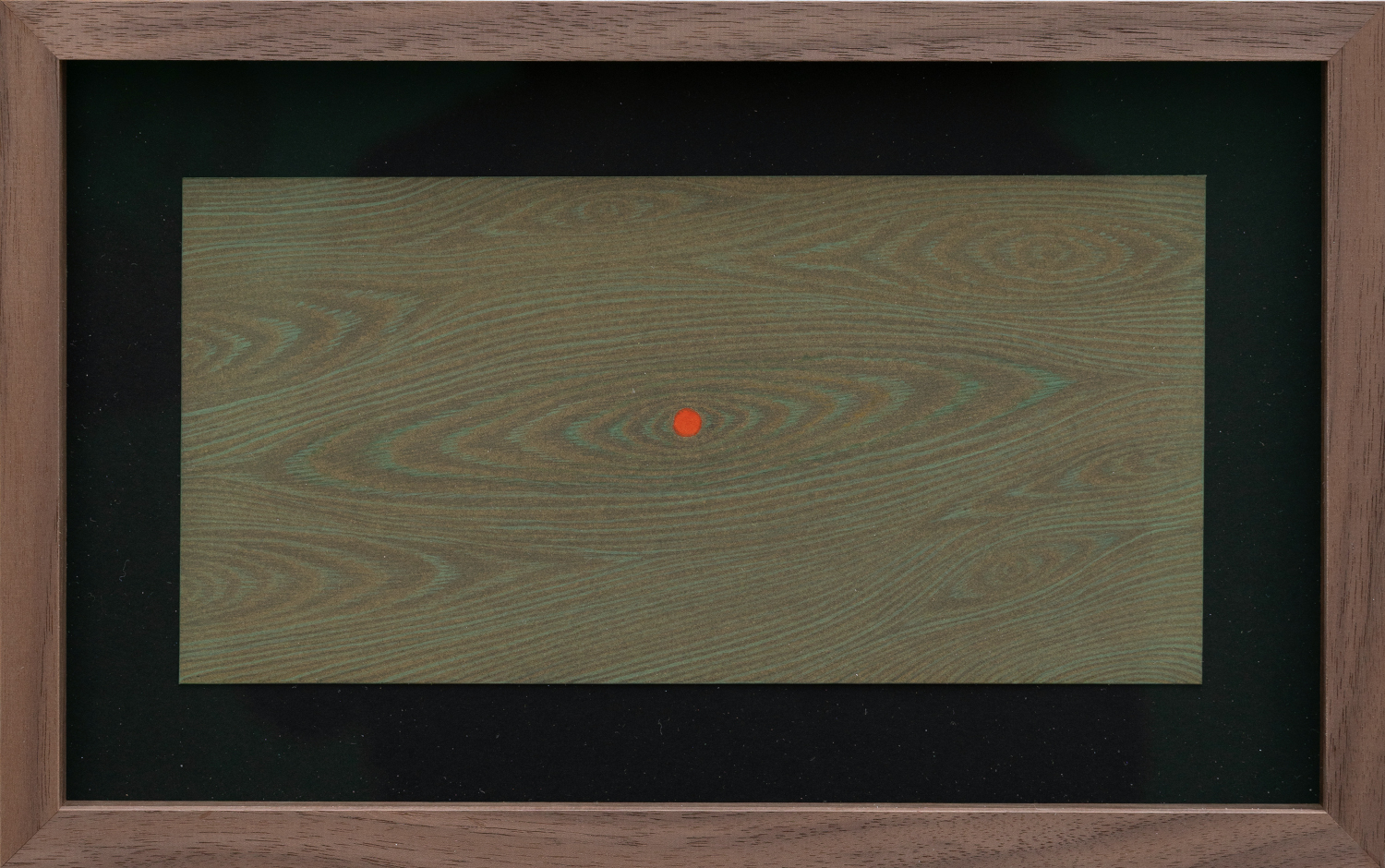
This wooden piece was once the shoulder blade of a variant of the life form. If you look closely at its surface, you can see twirling patterns that might remind one of streams in flowing water. Its body would once have been water itself, using pieces of driftwood as anchor points to gain agency within the water. In this way, it could move around freely, morphing and dancing with the currents. However, one day a long and heavy monsoon swept through its river home, leading to a flood of the river. A long drought followed, and the river was gone with it.
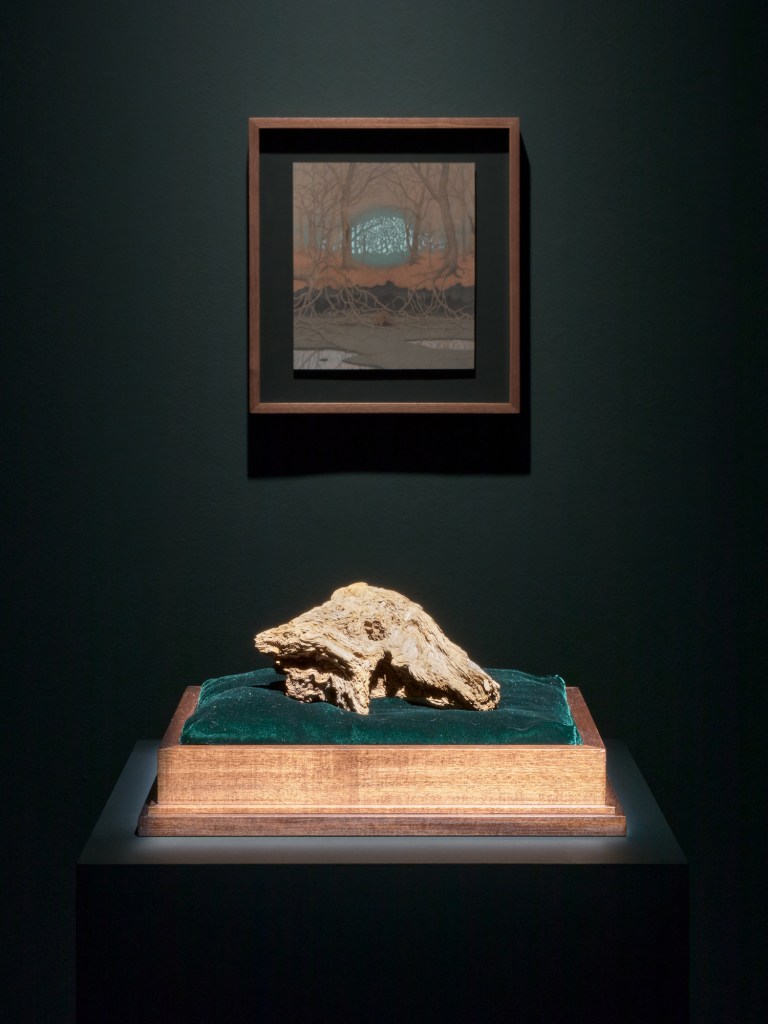
Riverbed
Once I play the fiddle
Currents move the land
Hold the wood
You will feel me
Endless rain soar
Floods rise all the floor
Heavens cloaked in teal
Sight closed like a door
Shoulder, head and feet
Scattered in every stream
Swirling rings baroque
A mare ran this dream
Ten suns awakened
Land cried all its tears
Peeling off the dirt
Gathered over the years
Acres of autumn gold
Carpet of orange leaves
Amongst all this love
Lay me in a bed of soil
A final drop remains
In the very last piece
Now follow the bright glow
The river is dead with me
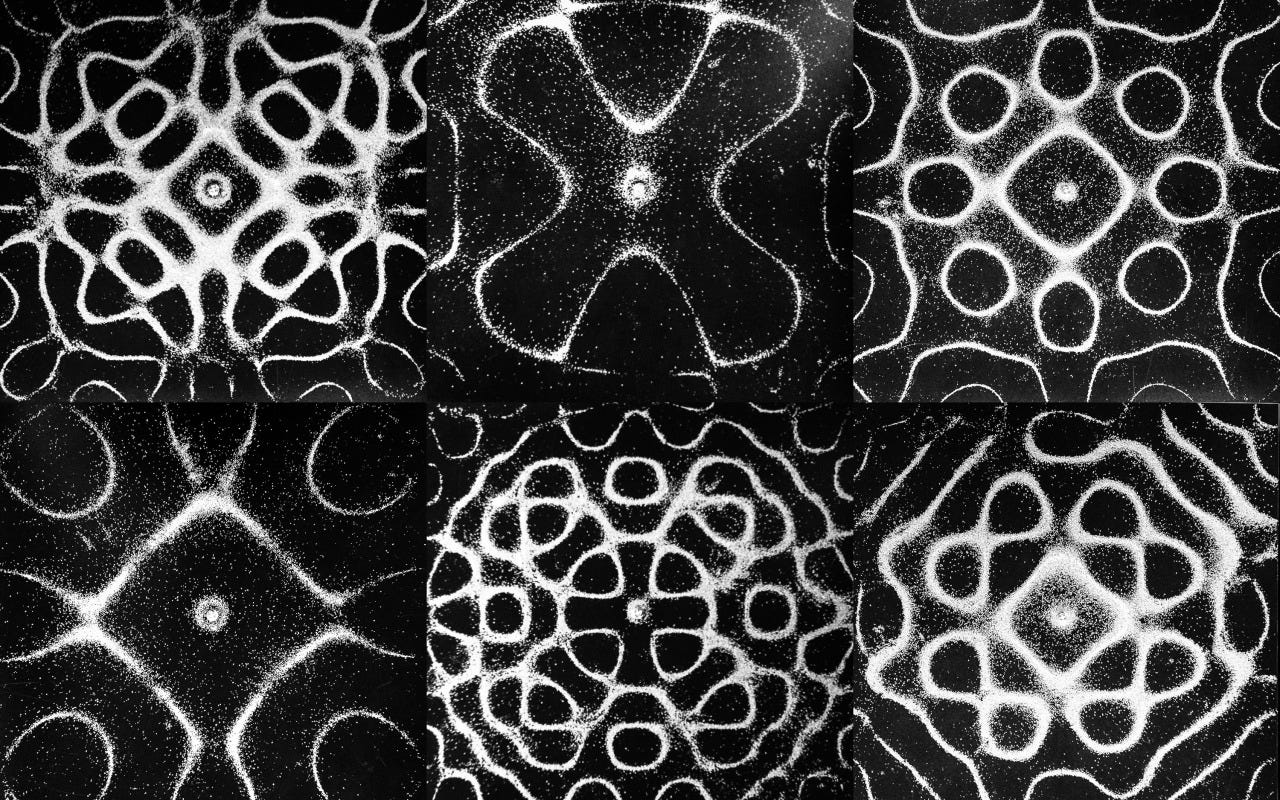
The small ball you see is actually heavier than you might think, as it is made of metal. After ran through a CT scan, scientists found patterns of labyrinths within, going in every direction. If you imagine the brain as filled with tiny, tiny nerve threads, here you can instead imagine microscopic hallways. Inside, tiny grains of stone were found, scattered across the labyrinth-like interior. This creature functioned rhythmically, using sound vibrations and reception as both communication and internal functions. The little balls would hammer into the halls of the labyrinth brain, these would then translate into a signal for the next ball to react, and so on. This system functioned throughout its entire body, so that if you ever were to come close to this creature, you would hear it as a loud, complex sequence of drumming rocks.
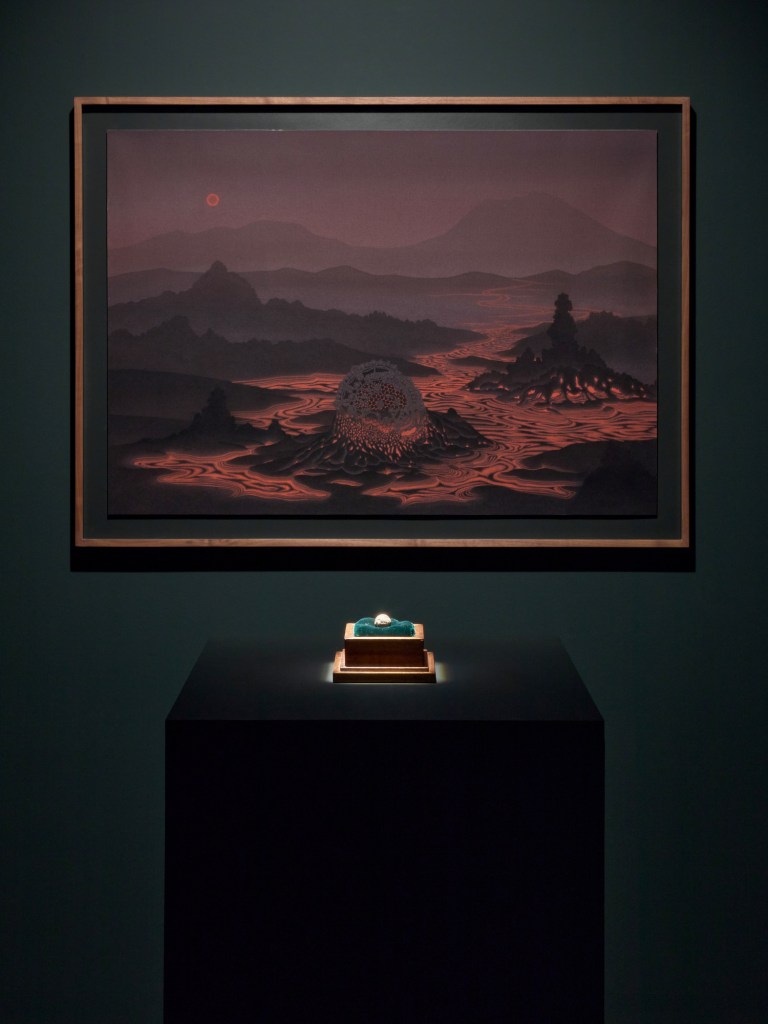
Orchestra
Tremor in a soft crescendo
Magma strings a thrum
With basalt, moulded bones
I rap, I twist, I strum
Her back thrown in arch
Spitting tongues command
Boulder to cobble, pebble to dust
Banging the crusted drum
Heavy the rumble grows
Coming in, coming out
Many rows of lifted hills
Clutter, shout, and sprout
Molten fluid of the spine
Rolling clouds of heat
Splash to a cymbal crash
With a patterned beat
The orchestra, full tutti
Rumble trapped in loop
Melting all my will
To a rocking soup
Shadowed talons rise
To sink the ashed sky
Heavy curtains drawn
To bid my final chime
This here is a nerve, but also a stem. It belonged to a variant of the creature where it took on the form of a gelatinous flower. The stem consists of a form of lichen, organized by the creature itself. The bell was described to have looked similar to a jellyfish, probably made of a similar substance. However, if picked it will lose its gelatinous structure, leaving only the stem. It was found by the edge of the water by a young woman who randomly swam into its cave. She described the flower as the most beautiful thing she had ever seen, and was tempted to take a bite. This later caused her to experience an auditory hallucination, and with the same voice that she had sung to the flower in praise of its beauty, a song was now sung to her. The flower seems to have made its own mythology of the sea, sun, and moon, as it recognized the latter as a bringer of food, meaning what came with the tide of the sea. This meal it believed was shared with the sun. It seems to have understood its own death as an event of the sun devouring the moon, while it itself was devoured.
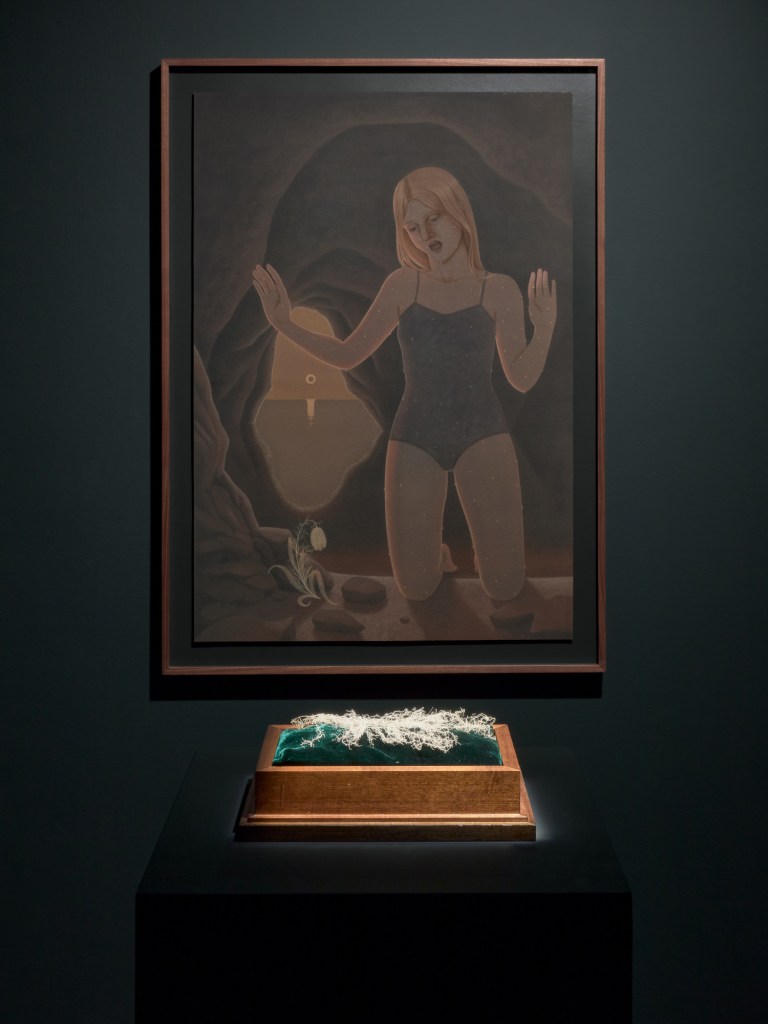
Spell
Sphere of glowing ice
Gasping all of sea
We both share this meal
The two of you and me
Silken, blue seal
Standing on the hill
Jeweled water drops
Her voice brings a thrill
As my coat slips
Gliding through her harp
Left in the palm
Eyes pierce sharp
She calls me beautiful
Special and rare
Sparking my nerves
A spell sung so clear
Jelly balls of blue
Sucking in black
Pink chasm open
Rows of pearly white
Spinning disc of fire
Hungry as can be
A black hole open
devouring him and me